
The Category That Finally Found Its Product
Smart glasses shipped 7.25 million units in 2025 - roughly half of all extended-reality hardware sold globally that year, up from just a quarter in 2024. The broader XR device market grew 41.6% year-over-year, and smart glasses drove almost all of that growth. Ray-Ban Meta alone moved over 6.5 million units and generated an estimated $2.15 billion in hardware revenue in 2025 - more than Meta's Quest VR headset line, for the first time ever. After more than a decade of false starts, this is the first version of face-worn computing that has genuinely found a mainstream audience.
Why This Attempt Is Different From Google Glass
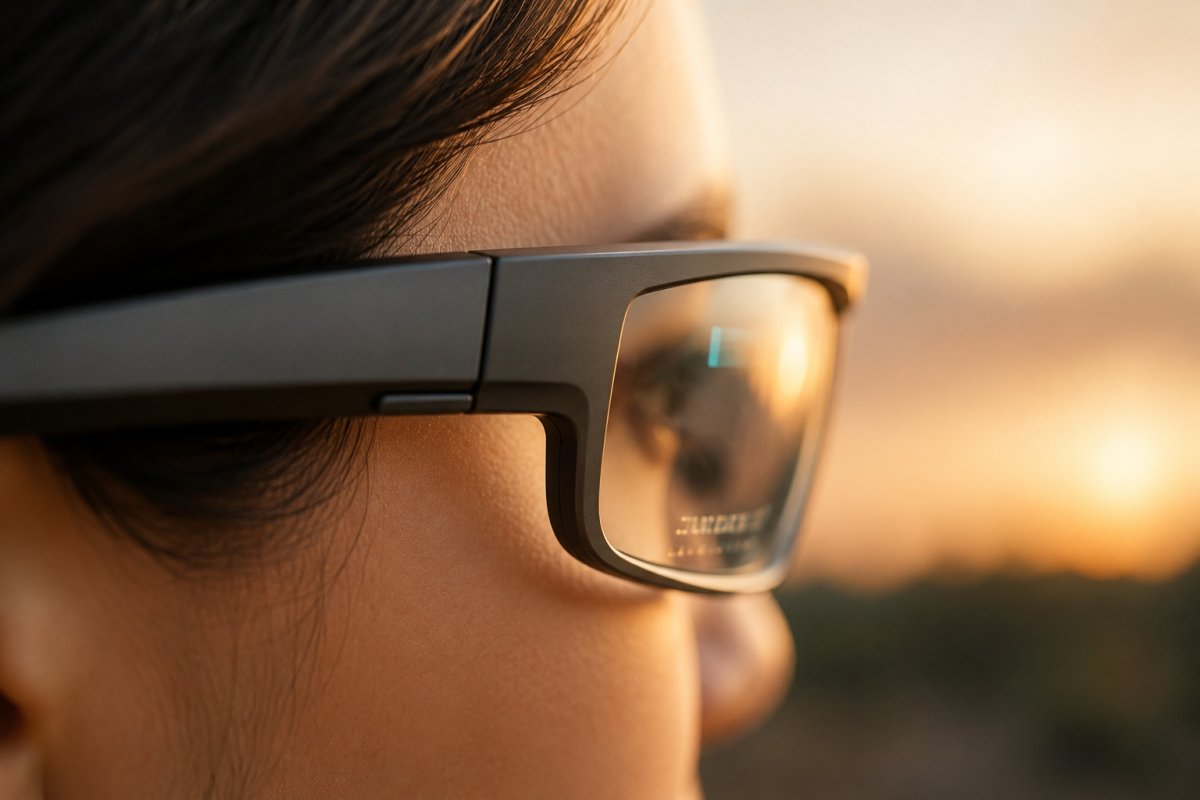
Google's original 2013 Glass failed for reasons that are instructive: a $1,500 price tag, limited real functionality, and a camera-on-your-face design that triggered immediate, widespread privacy backlash. The current generation has solved the first two problems directly - Ray-Ban Meta glasses look like ordinary sunglasses, cost a few hundred dollars, and lean on AI assistant functionality rather than a clunky heads-up display as the core feature. The privacy concern hasn't disappeared, but it's been softened by a decade of smartphone cameras normalising the idea that people around you might be recording, and by the glasses looking indistinguishable from regular eyewear rather than obviously marking the wearer as "the person with the camera."
Audio-Only Is Quietly Winning the Category
Here's a detail that cuts against the more futuristic marketing imagery: the fastest-growing and highest-volume segment isn't the glasses with built-in displays showing you notifications and directions - it's audio-only AI glasses with no screen at all, expected to account for roughly 91% of total smart glasses sales in 2026. These are lighter, cheaper, and require far less powerful hardware, and for most buyers the appeal is simpler than "augmented reality": hands-free access to an AI assistant, music, and calls, in a form factor that doesn't look or feel like wearable tech at all.
Every Major Tech Company Is Now In
Meta currently dominates with roughly 69-76% of the smart glasses market, built on its retail and manufacturing partnership with EssilorLuxottica, the world's largest eyewear company. That lead won't go unchallenged for long. Google is re-entering the category in 2026 with Android XR-powered glasses developed alongside Warby Parker, Gentle Monster, and Samsung, targeting both mainstream and luxury price points - with some analysts projecting Google's new lineup could outsell Meta's first-year numbers. Samsung has confirmed its own 2026 Android XR glasses with deep Gemini AI integration, and Apple is reportedly targeting a 2027 entry. By the end of 2026, at least three major hardware ecosystems will be competing for the same product category simultaneously.
The Trajectory: Cheaper, Not Fancier
Average selling prices for smart glasses, currently around $376, are forecast to fall to roughly $229 by 2030 - a nearly 40% decline that analysts describe as a hallmark of a maturing product category rather than a warning sign. The broader XR market, encompassing smart glasses, AR, and VR hardware together, is projected to grow from roughly $20 billion in 2025 to more than $85 billion by 2030. That growth is increasingly concentrated specifically in glasses rather than the bulkier VR headsets that dominated the category's earlier years - the industry appears to be converging on the idea that people will accept computing on their face only if it looks, weighs, and costs close to what a normal pair of glasses already does.
What This Actually Means for You
The realistic near-term use case isn't a sci-fi heads-up display overlaying your entire field of vision - it's a genuinely useful, hands-free AI assistant living in a pair of glasses you'd wear anyway, with photo and video capture as a secondary feature. The more ambitious AR display version - real-time translation subtitles, turn-by-turn navigation overlaid on the street in front of you - is real and shipping today in premium models, but remains a smaller, pricier slice of the market. If this trajectory holds, smart glasses becoming a genuinely mainstream computing accessory within the next few years looks considerably more plausible than any previous wave of face-worn tech - not because the vision changed, but because the industry finally built toward what people would actually wear.