
The Year Foldables Went Mainstream
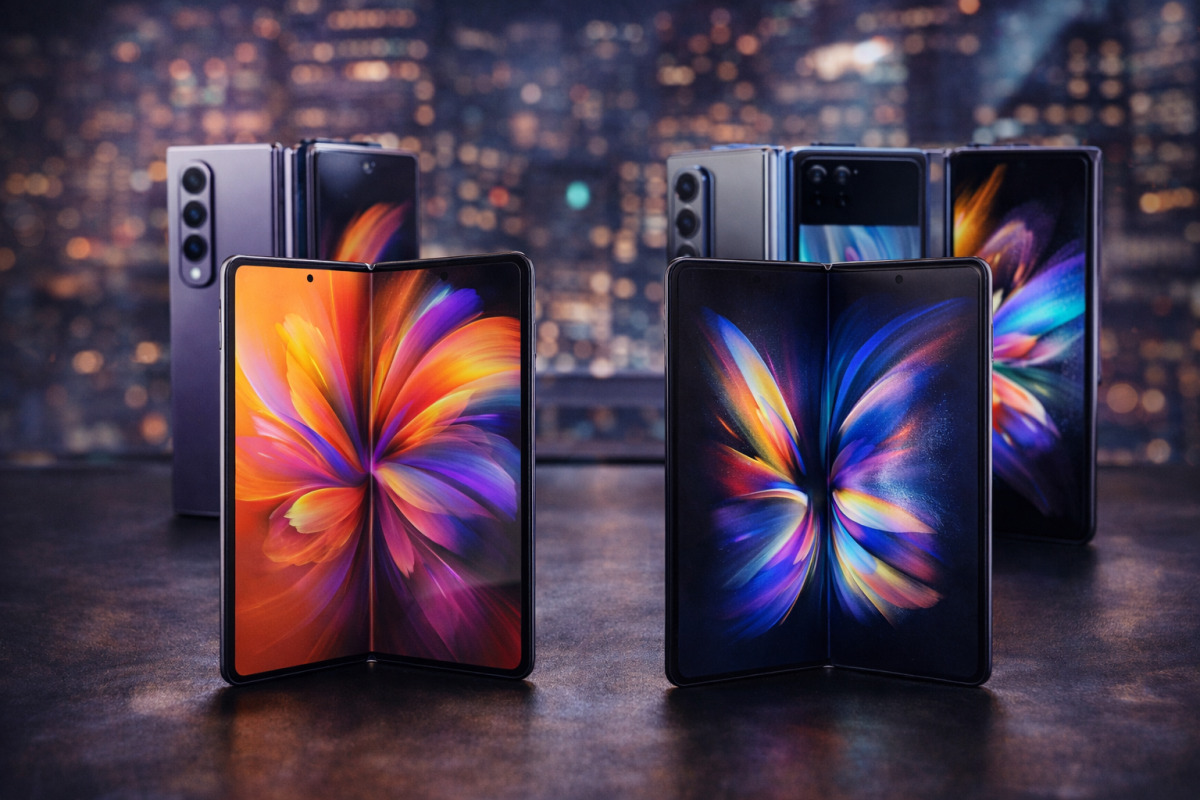
Three years ago, foldable smartphones felt like a compelling party trick - a technological demonstration that came with real-world compromises: visible creases, mediocre cameras, and eye-watering prices. The 2026 generation has changed the calculus fundamentally. The crease is effectively invisible. Camera systems are competitive with bar-form flagships. Prices have fallen to near-premium smartphone territory. The question is no longer "are foldables ready?" - it's "which foldable is right for you?"
We tested five devices - the Samsung Galaxy Z Fold 7, Google Pixel Fold 3, Honor Magic V3, OnePlus Open 2, and Motorola Razr 50 Ultra - across durability, display quality, camera performance, software experience, battery life, and overall value. Each device received 14 days of daily use as a primary phone.
The Winner: Samsung Galaxy Z Fold 7
The Samsung Galaxy Z Fold 7 wins our recommendation for productivity users. Its 8.0-inch inner display is indistinguishable from a premium tablet, and the crease is now truly invisible in normal usage conditions. The camera system - featuring a 200MP main sensor - is competitive with the best bar-form flagships. Battery life at 12.4 hours of screen-on-time finally matches conventional flagships.
Best Value: OnePlus Open 2
For value-conscious buyers, the OnePlus Open 2 delivers 90% of the Fold 7 experience at 70% of the price. Its 8.7-inch inner display is actually larger, and OxygenOS 15's foldable-specific features are among the most thoughtfully designed in the category. The camera system falls short in low light, but for most use cases it's more than adequate.