

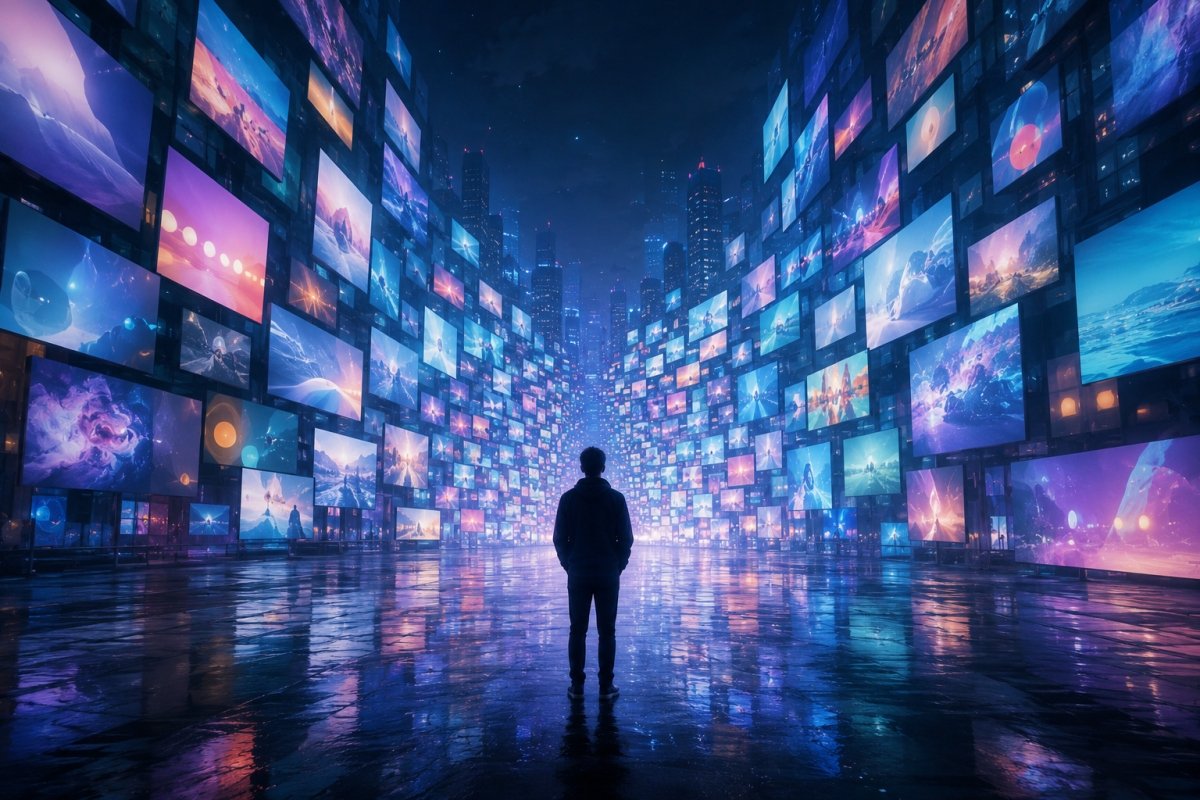
Nobody Chose Your Feed - Something Decided It For You
Open any major app and what you see is the output of a ranking system most people never think about: an algorithm deciding, out of everything that exists, exactly what to put in front of you next. That decision isn't neutral. It is trained on one overwhelming signal - what kept people like you engaged in the past - and it optimises relentlessly for more of that, regardless of whether it's the news you need, the products that suit you, or the opinions that broaden your thinking.
A Small Number of Companies, an Enormous Amount of Reach
A handful of platforms - owned by a small number of companies - now sit between billions of people and the information, opinions, and products they encounter daily. That concentration means a single ranking change, made by a small internal team optimising for engagement or revenue, can reshape what entire populations see, think is popular, or believe is true, almost overnight and with essentially no public input into the decision.
How This Shapes What You Buy
The same mechanics that decide what news you see also decide what products you're shown, and increasingly, what you believe you "organically" discovered. Sponsored content, algorithmically boosted product placements, and influencer marketing are often presented with minimal distinction from genuine recommendations, blurring the line between "people actually like this" and "this was paid to reach you." Search results, once treated as a neutral index, are themselves ranked by systems that platforms have both commercial and political incentives to shape.
How This Shapes What You Think
Because engagement-optimised systems favour content that provokes strong reactions, they systematically amplify the most emotionally charged version of any story rather than the most accurate or representative one. Over time, consistent exposure to a particular slant of content - not because you chose it, but because it performed best in the ranking system - can shift what feels normal, urgent, or true, an effect researchers call algorithmic framing. This isn't a matter of platforms picking a side deliberately in most cases; it's a byproduct of optimising for attention, which happens to reward extremity more reliably than nuance.
The Case for Some Optimism
It's worth resisting the fully cynical read. These same platforms have given a genuine voice to people and causes that traditional media routinely ignored, made niche communities and small businesses viable at a scale that wasn't possible before, and made vast amounts of genuinely useful information more accessible than at any point in history. The concern isn't that ranking algorithms exist - some form of curation is unavoidable at this scale. The concern is that the specific thing they optimise for is rarely disclosed, rarely accountable to the people affected by it, and rarely aligned with what those people would choose for themselves if given the option.
What You Can Actually Do
You can't opt out of algorithmic curation entirely, but you can reduce how much power any single one has over you. Deliberately following sources directly - a newsletter, an RSS feed, a bookmarked homepage - bypasses the ranking system for that content entirely. Diversifying which platforms you use for news and shopping limits any one company's influence over your view of the world. And treating "this feels urgent and everyone seems to be talking about it" as a prompt to check elsewhere, rather than as proof of importance, is a small habit that meaningfully blunts the effect of engagement-driven amplification.