
It Was Never Really About Connection
Social media platforms describe themselves as tools for connection. Internally, the metric that actually determines whether a feature ships is almost always some version of engagement - time spent, sessions per day, how quickly you return after leaving. This isn't a conspiracy theory; several former platform executives and engineers have said as much publicly, describing how design decisions were tested and kept specifically because they increased time-on-app, independent of whether they made users happier.
The Design Tricks You Already Know, Explained
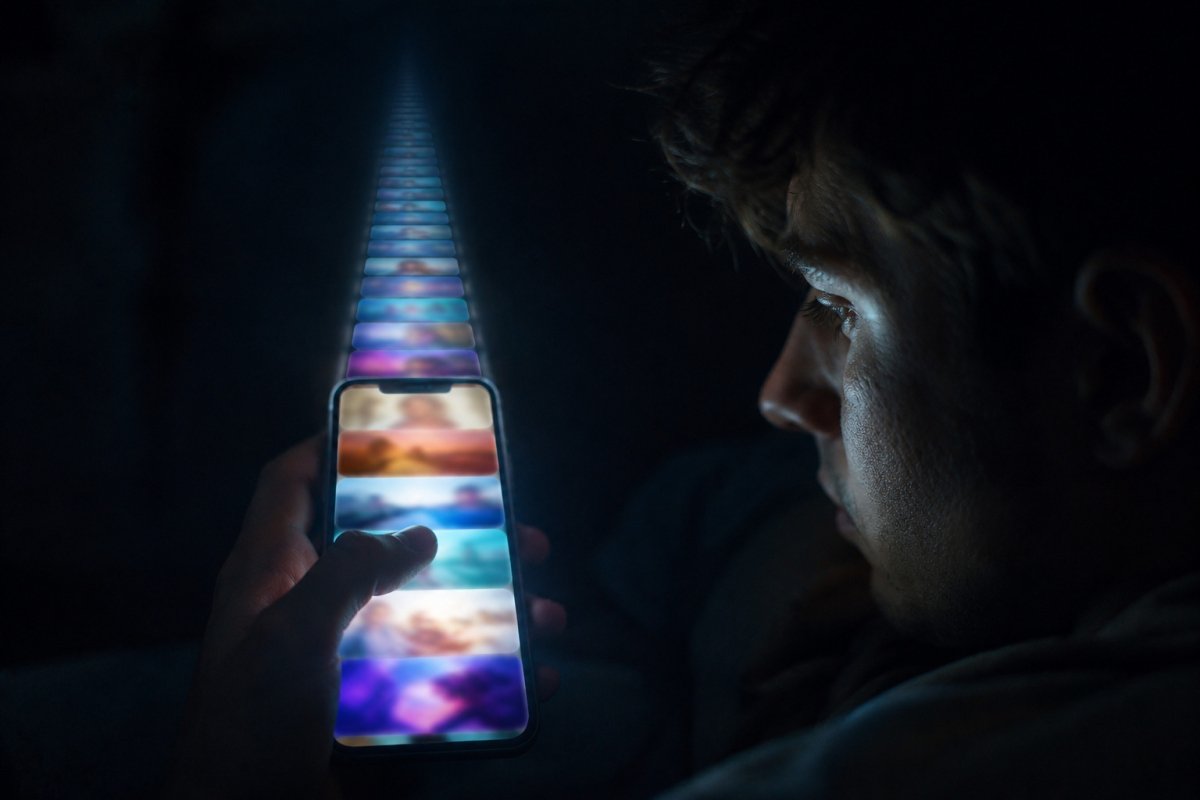
The infinite scroll removes the natural stopping cue that a physical newspaper or a finite list would give you - there is always one more post, so your brain never gets the "I'm done" signal. The pull-to-refresh gesture mimics a slot machine lever, and the tiny delay before new content loads mirrors the same anticipation mechanic. Notifications use variable rewards - you don't know if the next one will be a meaningless like or something genuinely exciting, and that uncertainty is precisely what makes checking compulsive rather than routine. None of these are bugs. They are the product of extensive testing to find the version that keeps people opening the app most often.
What This Actually Does to Attention
Heavy, fragmented social media use has been linked in a growing body of research to shorter attention spans, increased anxiety around social comparison, and disrupted sleep - particularly among teenagers, whose brains are still developing the self-regulation skills needed to resist these design patterns. It is worth being precise here: the research on causation is still evolving and not every study agrees on the size of the effect, but the direction is consistent enough that public health bodies in multiple countries have started treating heavy adolescent social media use as a genuine area of concern rather than a moral panic.
It's Not About Willpower
The most important thing to understand is that struggling to put your phone down is not a personal failing. These systems are built by teams of engineers and behavioural scientists specifically to be difficult to resist, tested against millions of users to find the version that works best. Blaming yourself for losing a design competition you didn't know you were entering is not useful. Understanding the mechanism is.
What Actually Helps
The interventions that work tend to change your environment rather than rely on discipline alone. Turning off non-essential notifications removes the trigger before it happens. Moving social apps off your home screen adds enough friction to interrupt automatic reaching. Greyscale mode reduces the visual reward of a colourful feed. Setting app timers with real enforcement, not just a dismissible reminder, helps more than intention alone. And simply naming what a feature is designed to do - "this scroll has no natural end, on purpose" - makes it noticeably easier to close the app on your own terms rather than the app's.
The Bigger Picture
None of this means social media is without real value - it connects people across distance, gives marginalised communities a voice, and has become a genuine source of information and even livelihood for many. The point isn't to demonise the platforms wholesale. It's to recognise that your attention is the product being sold, understand the mechanics well enough to use these tools deliberately instead of compulsively, and make that choice with open eyes rather than none at all.