
The Biggest Windows Redesign in a Decade
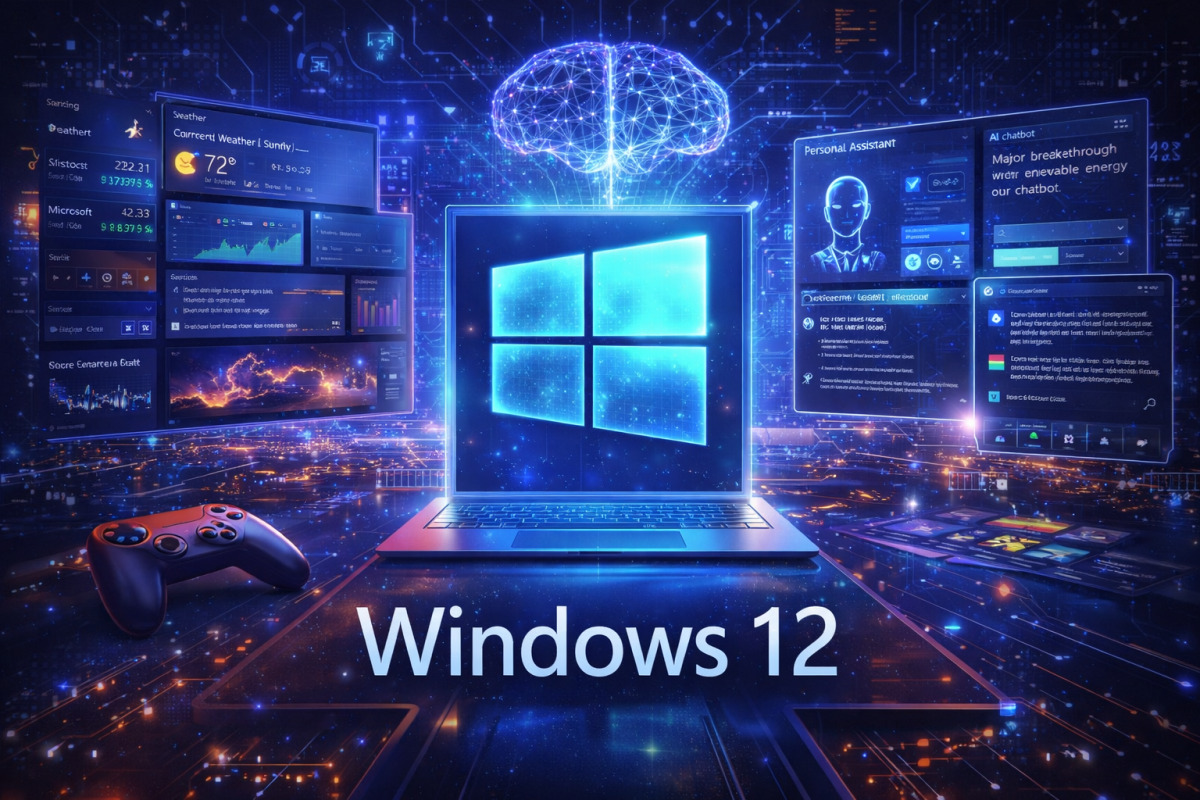
Leaked screenshots circulating in developer forums paint a vivid picture of Windows 12 - and it is unlike anything Microsoft has shipped before. The Start menu is gone, replaced by an intelligent Activity Hub that learns from your work patterns and surfaces relevant apps, files, and contacts contextually. The taskbar has been completely rebuilt with a floating design that can dock to any edge of the screen.
The most dramatic change is the deep integration of Microsoft Copilot at the OS level. Rather than a sidebar assistant, Copilot in Windows 12 operates as a background intelligence layer - understanding context across all open applications and offering suggestions proactively without requiring explicit invocation.
Cloud-First Filesystem
Windows 12 introduces OneDrive 365 - a unified filesystem that treats local and cloud storage identically from the user's perspective. Files are AI-indexed and semantically searchable: you can find any document by describing its contents in natural language. "Show me the budget spreadsheet from last month" returns the correct file instantly.
Performance and Battery Life
Battery optimisation has seen a major overhaul. AI-driven power management dynamically allocates resources based on predicted workload, resulting in 40% longer battery life in Microsoft's internal benchmarks on identical hardware. On Snapdragon-powered devices, this translates to genuine 20+ hour battery life on thin-and-light laptops.
Release Timeline
Microsoft has not officially confirmed Windows 12, but industry sources consistently point to a reveal at Build 2026 in May, with general availability in Q4 2026. The upgrade is expected to be free for Windows 11 users meeting the hardware requirements - which notably require a dedicated NPU with at least 40 TOPS of AI compute.