
What Solid-State Actually Changes
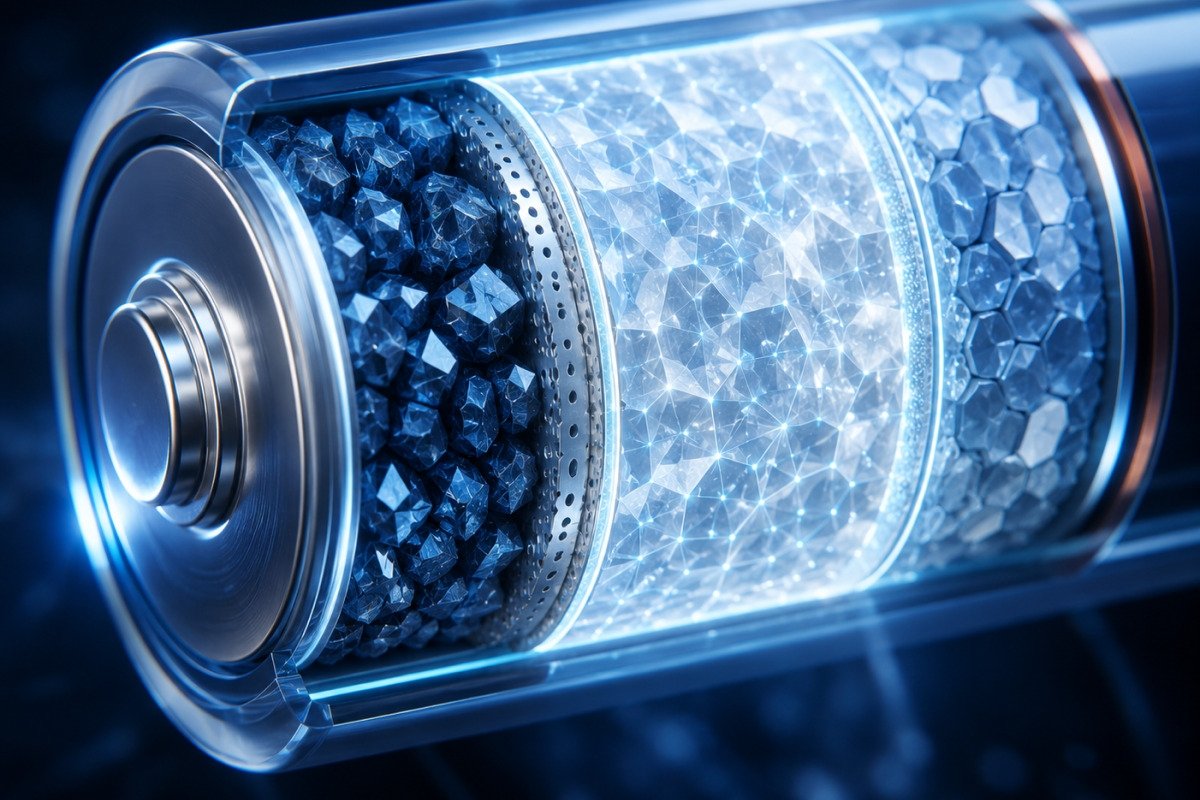
Today's lithium-ion EV batteries use a liquid electrolyte - a flammable chemical solution that carries charge between the battery's electrodes. Solid-state batteries replace that liquid with a solid material, which sounds like a small engineering swap but unlocks genuinely significant gains: roughly double the energy density of current cells, dramatically faster charging, and a substantially lower fire risk since there's no flammable liquid to ignite in a crash. On paper, this is the upgrade that finally resolves EVs' two most-cited weaknesses - range anxiety and charging time - in one technological leap.
The Numbers Automakers Are Actually Promising
Toyota's public roadmap, reaffirmed as recently as the 2025 Tokyo Motor Show, targets a first-generation solid-state battery delivering around 1,000 kilometres (620 miles) of range with a 10-to-80% charge in roughly 10 minutes, with a second generation aiming even higher at 1,200 kilometres (745 miles). Samsung SDI has demonstrated prototype cells with roughly double the energy density of current lithium-ion, targeting limited 2027 production for premium vehicles. These aren't vague aspirational statements - they're formal roadmaps validated in Toyota's case by Japan's own Ministry of Economy, Trade, and Industry, which approved the company's production plans in October 2025.
Why "Just Three Years Away" Keeps Being True
Here's the pattern worth understanding before getting excited about any specific date: Toyota first announced solid-state battery plans in 2020, targeting a 2020s launch. That slipped to 2023, then 2026, and current guidance points to 2027-2028 for the first actual vehicles - and even that revised timeline covers a low-volume, flagship-first rollout, not anything resembling mass-market availability. This isn't unique to Toyota; solid-state battery announcements across the industry have followed a strikingly similar pattern of ambitious initial timelines followed by repeated, incremental delays, which is common for genuinely hard materials-science problems but worth factoring into how much weight any single announced date deserves.
The Most Sobering Assessment Comes From Inside the Industry
Robin Zeng, chairman of CATL - the company that controls roughly 40% of the global EV battery market and therefore has both the expertise and the incentive to assess this honestly - told the World Economic Forum that solid-state battery technology sits at "level four of nine" on the industry's own readiness scale, with true mass production not arriving before 2030. That's a notably more conservative read than most of the marketing-driven coverage of the technology, and it's coming from the company with the most detailed inside view of how hard the remaining manufacturing problems actually are.
What's Already Shipping, Which Is Not the Same Thing
Adding to the confusion, several "solid-state" announcements in the market actually describe semi-solid or condensed-matter batteries - transitional technologies that reduce but don't fully eliminate the liquid electrolyte. China's SAIC-owned MG brand has already sold over 100,000 units of a semi-solid EV, and CATL's condensed matter battery represents a similar stepping-stone technology. These are genuine, useful improvements, but engineers distinguish them clearly from "true" solid-state, which uses no liquid phase at all - a distinction worth knowing since marketing materials don't always make it clear which version a given announcement is actually describing.
What This Means If You're Buying an EV Now
If you're shopping for an EV in the 2026-2028 window, the realistic, well-supported advice from analysts tracking this closely is: don't wait. Current lithium-ion technology is mature, continuously improving through better chemistry and manufacturing efficiency, and will remain the technology in the vast majority of EVs sold for at least the rest of this decade. The first true solid-state EVs will likely arrive around 2027-2028 as expensive, low-volume flagship models - probably Lexus first, given Toyota's roadmap - with anything resembling affordable, mass-market solid-state EVs realistically pushed to 2030 and beyond. The technology is real and the gains are genuine; the timeline just keeps being further away than the headlines suggest.