

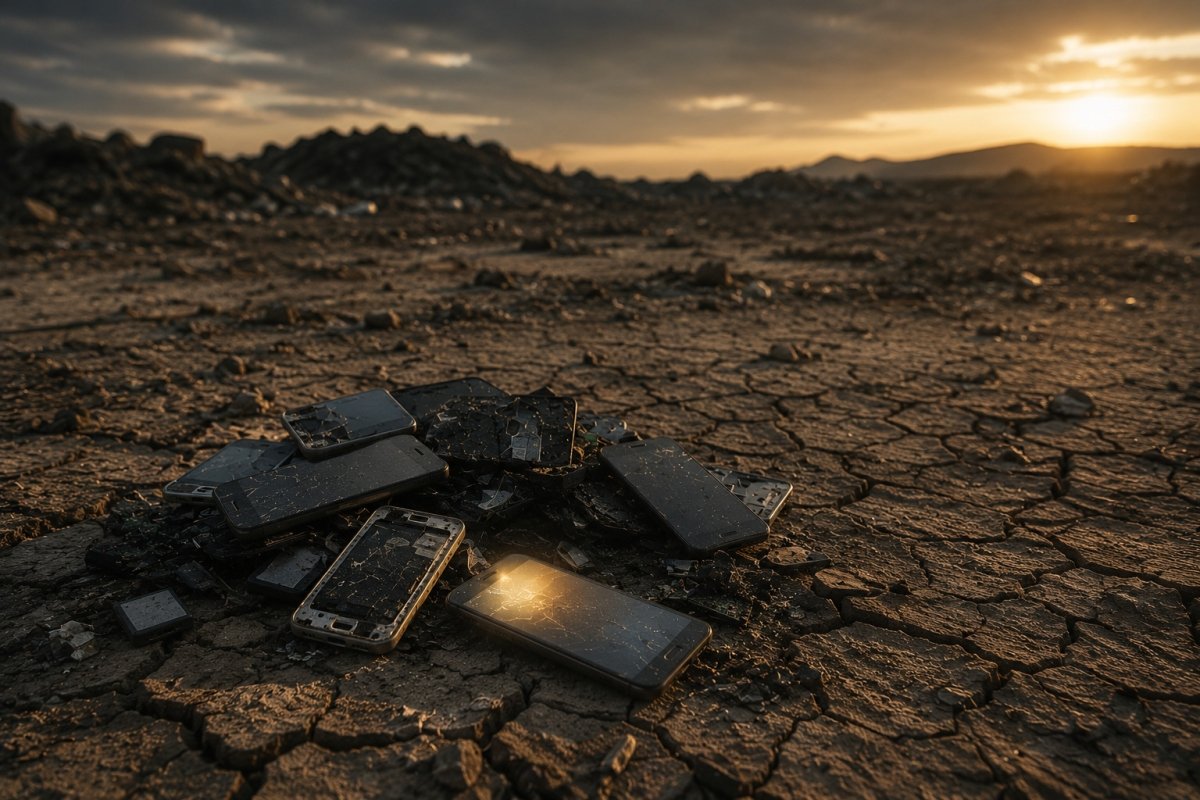
A Waste Stream Growing Faster Than We Can Handle
Every phone upgrade, discarded laptop, and dead pair of wireless earbuds adds to what the United Nations now calls the world's fastest-growing waste stream. Global e-waste generation hit roughly 62 million tonnes in 2022, according to the UN's Global E-waste Monitor - an 82% jump from 2010 - and is projected to reach 82 million tonnes by 2030. To put that weight in perspective, 62 million tonnes would fill more than 1.5 million standard 40-tonne trucks, enough to form a line stretching around the entire planet.
The Recycling Gap
Here is the uncomfortable part: less than a quarter of all e-waste generated - just 22.3% - is formally collected and properly recycled. The rest is landfilled, informally scavenged for valuable parts under often unsafe conditions, or simply lost to the system entirely. That gap represents more than lost material - the metals embedded in a single year's e-waste - gold, silver, copper, iron, and more - have been valued at roughly $91 billion, of which about $62 billion worth is never recovered and simply lost.
Why Recycling Rates Stay So Low
Part of the problem is structural: only around 4 in 10 countries worldwide have any legislation governing e-waste management at all, leaving huge parts of the world with no formal system to route old electronics into responsible recycling. Part of it is behavioural: old phones and laptops tend to sit forgotten in drawers rather than being actively discarded, which sounds harmless but means they never enter any recycling stream in the first place. And part of it is economic: it is often cheaper for wealthier countries to export e-waste - legally or illegally - to developing regions with looser enforcement than to process it responsibly at home.
What Happens in the Informal Sector
In many receiving countries, e-waste that isn't formally recycled is broken down by hand in informal settlements, often by workers, sometimes including children, with minimal protective equipment. Circuit boards are burned to recover copper, batteries are cracked open, and plastics are melted - releasing lead, mercury, and other toxic substances into the soil, water, and air of surrounding communities. This is the part of the smartphone lifecycle that almost never makes it into a product launch keynote.
What Actually Helps
The single most effective thing an individual can do is keep devices in active use for longer - extending a phone's life by even one extra year meaningfully reduces its lifetime environmental footprint, since manufacturing typically accounts for the majority of a device's total emissions. When a device does reach end of life, using manufacturer trade-in and take-back programmes or certified e-waste recyclers - rather than the regular bin - ensures materials are recovered through channels with actual environmental and labour standards. Buying refurbished devices where possible, and choosing brands that support longer software update cycles, also reduces the pressure to upgrade purely because a device has stopped receiving security updates rather than because it has actually stopped working.