
The Streaming Plateau
Netflix reached 302 million paid memberships globally by end of 2024 - a staggering number, but one that signals an inevitable slowdown. Penetration in its core markets of North America and Western Europe is approaching saturation, and the password-sharing crackdown that drove a surge in paid subscribers through 2023 and 2024 has largely run its course. The era of easy subscriber growth is over. What comes next defines whether Netflix remains the dominant platform of the streaming era or begins a long, slow consolidation.
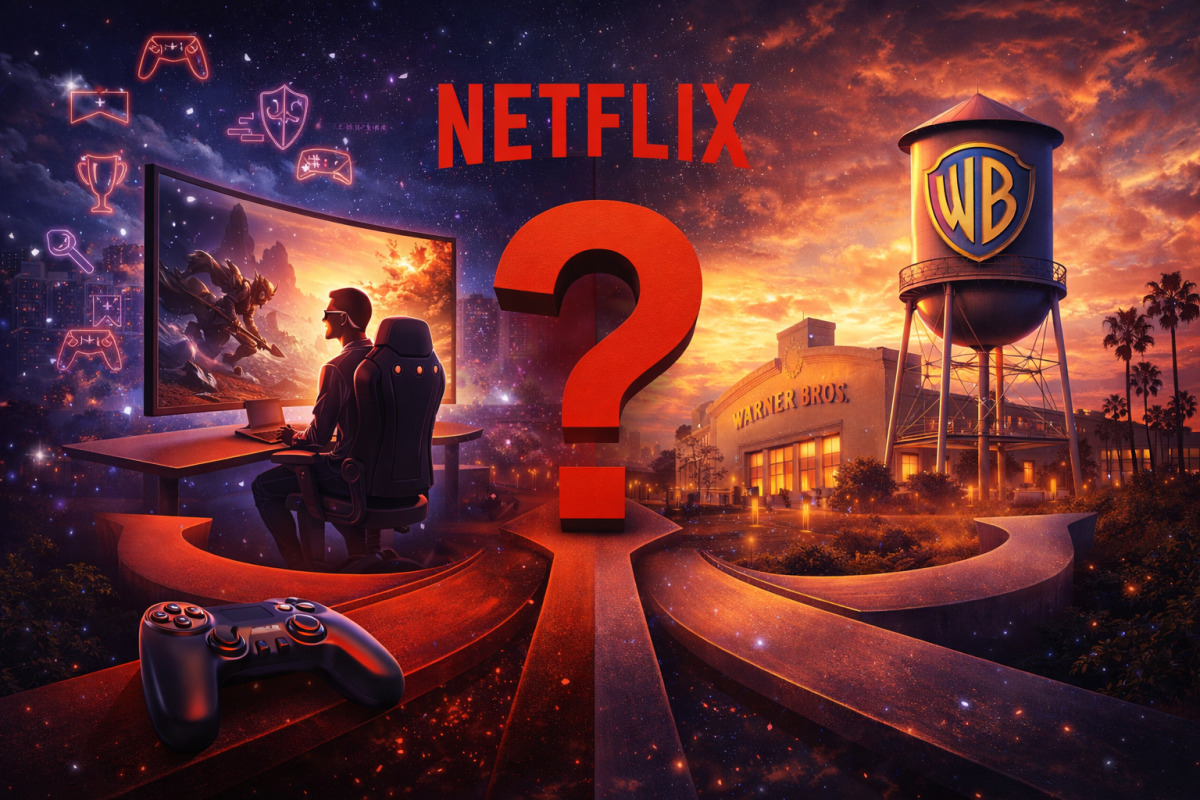
Netflix's response has been anything but passive. In December 2025, the company announced a definitive agreement to acquire Warner Bros. - the film and television studio, including HBO, HBO Max, and franchises spanning Batman, Harry Potter, and DC - for a total enterprise value of $82.7 billion. The deal, which is pending regulatory approval and a WBD corporate restructuring, would represent the largest media acquisition in history and give Netflix the IP depth it has spent a decade trying to build through originals.
The Gaming Angle
Less noticed but equally strategic is Netflix's ongoing push into mobile gaming. Netflix Games now offers over 100 titles included in the standard subscription - no additional cost, no in-app purchases. Monthly active gaming users have been growing steadily, though engagement remains modest: only around 1.7% of subscribers play Netflix games monthly, a figure the company is working to improve through higher-profile titles and tighter platform integration. Gaming is not yet a reason subscribers choose Netflix, but it may be becoming a reason they stay.
The mobile gaming market generates approximately $98 billion in annual revenue globally. For Netflix, gaming is not primarily a revenue line - it is a retention and engagement tool. Every hour a subscriber spends in a Netflix game is an hour they are not evaluating competing streaming services. The logic is sound; execution at scale is the challenge Netflix has not yet solved.
The Road Ahead
The Warner Bros. acquisition, if approved, would transform Netflix from a streaming service with an original content operation into a fully integrated entertainment company with theatrical distribution, one of the world's most valuable IP libraries, and the HBO brand - possibly the most prestigious in prestige television. Whether the $82.7 billion price reflects fair value for those assets, and whether Netflix can manage the operational complexity of the combined business, are the questions every analyst is currently trying to answer.