

A Real Milestone, With a Large Asterisk
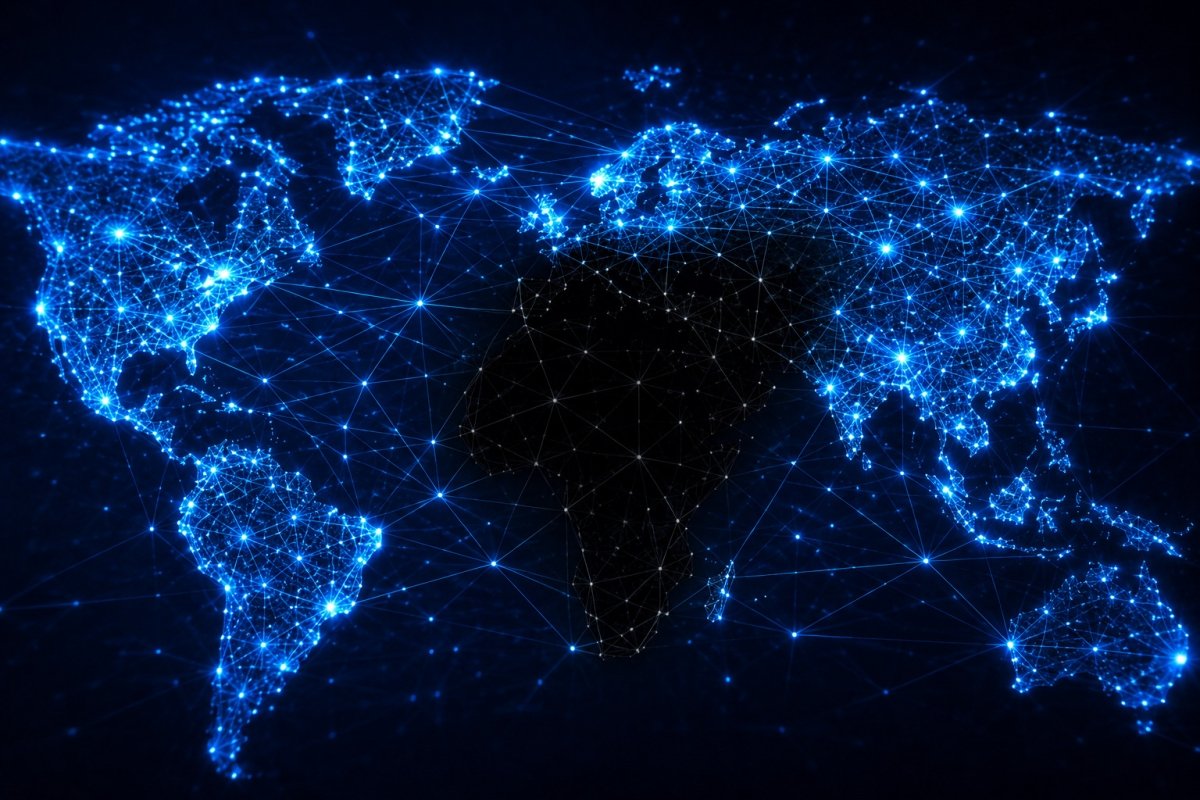
Global internet users crossed 6 billion in 2025 - about 74% of the world's population, according to the International Telecommunication Union - up from 60% just five years earlier. That's genuine, rapid progress. It also means an estimated 2.2 billion people remain entirely offline, the overwhelming majority of them in low- and middle-income countries. In low-income countries specifically, internet usage sits at just 23%, compared to 94% in high-income economies - a gap of more than four to one.
It's Not Just "Connected" or "Not"
Raw access numbers understate the real divide, because being "online" covers an enormous range of actual experience. Only 4% of people in low-income countries have access to 5G networks, compared to 84% in high-income countries. Urban areas globally reach roughly 86.5% internet penetration, while rural areas lag at 54.5% - a gap that persists even within wealthy countries, not just between them. Researchers increasingly describe this as the shift from an "access divide" to a "quality divide" - the newer, harder-to-solve problem isn't simply whether someone can get online, but whether their connection is fast, affordable, and reliable enough to support modern uses like video calls, remote work, or online education.
Where the Gap Is Widest
Southern Asia has the largest unconnected population in absolute terms - India alone has more than 440 million people without internet access, and Pakistan close to 139 million. Sub-Saharan Africa has the lowest regional penetration rate overall, at around 37%, though this masks enormous internal variation - Kenya reaches roughly 85% penetration while some Central African nations sit below 15%. A persistent and often under-discussed gender gap compounds the picture: UNESCO data shows roughly 327 million fewer women than men are online globally, a disparity most pronounced in the least developed countries but present in nearly every region studied.
Why This Isn't Just an Inconvenience
Internet access has become a genuine gateway to economic participation, not a luxury layered on top of it. One widely cited PwC analysis estimated that closing the global internet access gap could lift a meaningful share of currently offline people out of absolute poverty and add trillions of dollars to global economic output. In education specifically, the gap compounds existing inequality - students without reliable home internet depend entirely on school infrastructure that is frequently under-resourced in exactly the communities that need it most, meaning the digital divide often reinforces, rather than helps close, pre-existing educational and economic gaps.
What's Actually Being Done
Progress, while slower than the scale of the problem demands, is real. Low-earth-orbit satellite constellations like Starlink now cover more than 60 countries specifically targeting underserved rural areas that traditional cable and fibre infrastructure has never economically justified reaching. Government programmes like the US Rural Digital Opportunity Fund have committed over $20 billion toward closing domestic connectivity gaps. Affordable smartphone availability has been a major driver of recent gains, particularly in Africa, where some regions have seen internet adoption grow by triple-digit percentages year over year as device costs fall.
The Honest Trajectory
The offline population has fallen fairly steadily - from 3.7 billion in 2019 to roughly 2.2-2.6 billion today, depending on the measurement source - which is genuine progress worth acknowledging. But the pace is slowing as the remaining offline population becomes concentrated in the hardest, most expensive places to reach: remote rural regions, conflict-affected areas, and communities where affordability, not infrastructure, is the primary barrier. Closing the remaining gap will likely require a different set of tools - subsidised access, digital literacy programmes, and low-cost devices - than the ones that got the world from 40% to 74% connected over the past decade.