
Sony Has Not Confirmed the PS6 - But the Signals Are Everywhere
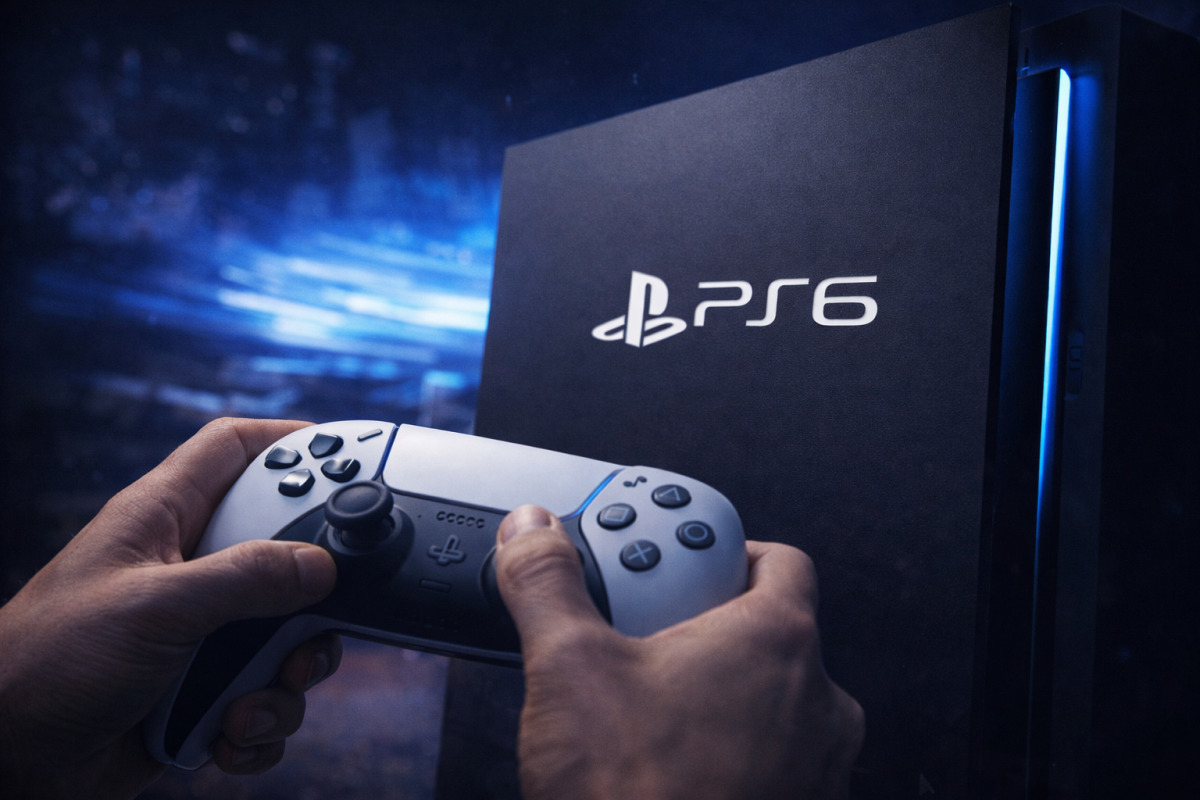
As of February 2026, Sony Interactive Entertainment has made no official announcement about the PlayStation 6. The company has not confirmed a name, a release window, hardware specifications, or a price. What it has done - through its partnership with AMD, through patent filings, and through the work of system architect Mark Cerny - is leave an increasingly clear trail of technical breadcrumbs that point toward a next-generation console in active development. Whether that console arrives in 2027 or later is a genuinely open question.
Bloomberg reported in February 2026 that Sony is considering pushing the PS6 launch to 2028 or even 2029 - a delay that would represent the longest gap between PlayStation generations to date. The reason cited is a global GDDR7 memory shortage, driven by unprecedented AI infrastructure demand. Micron's VP confirmed at CES 2026 that the shortage could persist for quite some time. That said, sources closer to Sony's supply chain have clarified that no formal delay decision has been made, and Sony's agreement with AMD to manufacture the rumoured Orion APU by mid-2027 remains on track.
What Project Amethyst Tells Us About the Hardware
In October 2025, Sony and AMD unveiled three technologies under Project Amethyst - a machine learning-focused hardware initiative that Mark Cerny practically confirmed will feature in the PS6. The three technologies are Neural Arrays (a new approach to grouping GPU compute units to work as a single AI engine, enabling better upscaling at lower cost), Radiance Cores (hardware-accelerated ray tracing at significantly improved performance), and Universal Compression (boosting memory bandwidth efficiency to partially offset the impact of memory shortages on performance). Technical leaks suggest the PS6 chip will use Zen 6 CPU cores paired with RDNA 5 graphics, targeting approximately 3x the rasterization performance of the PS5.
The Handheld Question
A Sony gaming handheld - codenamed Canis - has appeared in multiple leaks and AMD documentation. It is described as capable of running PS4 and PS5 games natively without streaming, using a custom AMD silicon variant. Some analysts expect the handheld to launch before or alongside the PS6, serving as a bridge product for the generation transition. A comparison at CES 2026 between Intel's upcoming Panther Lake chips and the rumoured Canis hardware suggested the device would deliver PS4-class performance at around 15 watts - a promising target for a handheld gaming device. None of this has been confirmed by Sony.
When Should You Expect It?
The most credible window remains late 2027, assuming the memory shortage eases and manufacturing timelines hold. A 2028 or 2029 launch is possible if component costs remain prohibitive - Sony has historically shown a willingness to delay rather than launch at an uncompetitive price point. The PS5 Pro's continued strong sales give Sony breathing room; there is no competitive urgency forcing an announcement. For now, the PS6 remains gaming's most anticipated mystery - and the silence from Sony's official channels is telling a story of its own.