

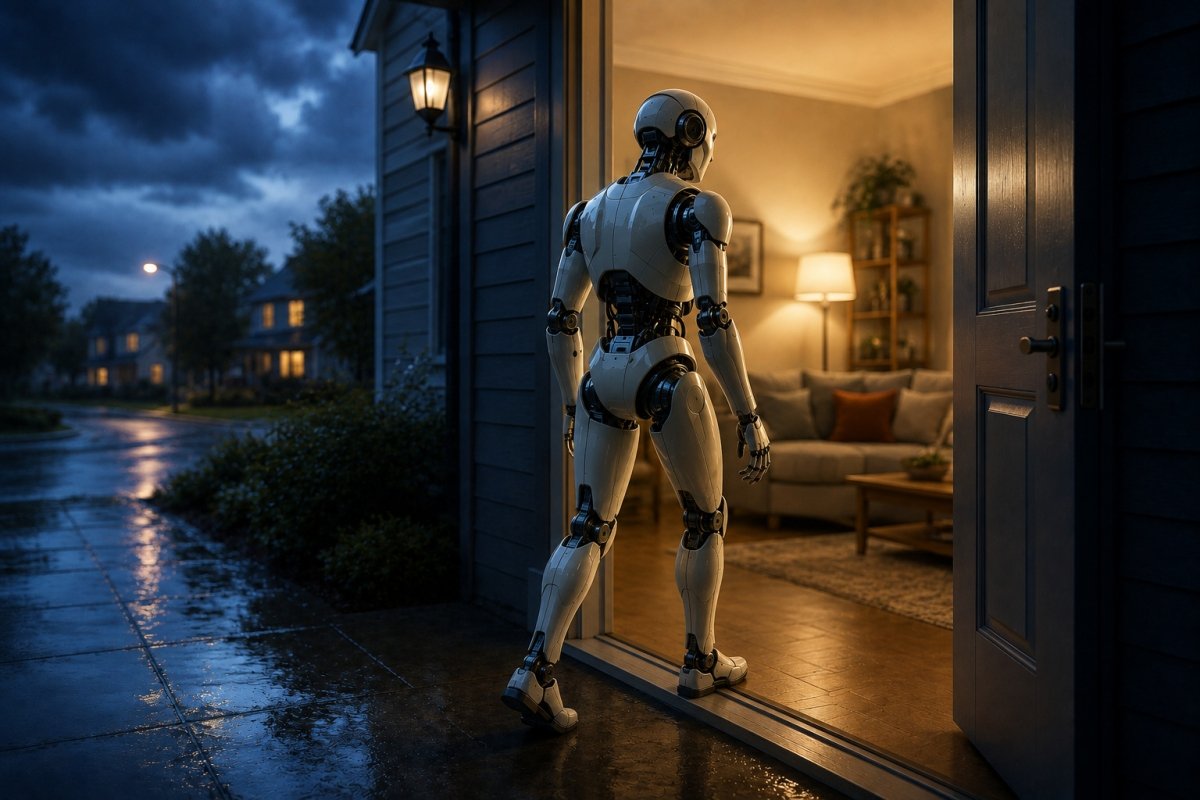
2026 Is the Year These Left the Lab
For most of the 2010s, humanoid robots were research demonstrations and viral videos, not products. That changed in 2026: Figure's Figure 03 is running active pilots at BMW's Spartanburg plant in partnership with OpenAI, Boston Dynamics' fully electric Atlas is deployed at Hyundai facilities, and Tesla's Optimus has a public presence on factory floors at Fremont and Giga Texas. Multiple companies - Figure, 1X, Apptronik, Agility, Tesla - have moved units into genuine customer pilots at major manufacturing and logistics operations for the first time. The pilots are real. The improvement in raw capability over what existed just three years ago is real too.
The Gap Between the Headline Numbers and What's Verified
This is where the story gets genuinely more interesting than the press releases suggest. Widely circulated figures claim Tesla has passed 50,000 cumulative Optimus units and that Figure has surpassed 10,000 deployments - but independent tracking has found neither figure holds up against the companies' own public filings and statements. Tesla has never published an audited Optimus production count at all; the most credible independent reporting puts cumulative builds in the low hundreds, and as of mid-2026, Optimus production at the Fremont facility hadn't even started, despite Tesla's own guidance repeatedly pointing to "later this year."
What the CEO Himself Has Admitted
The most striking data point in this entire space came directly from Tesla's own earnings call. On the Q4 2025 call in January 2026, Elon Musk explicitly conceded that Optimus units inside Tesla's factories were "not doing useful work" and remained "primarily for learning, not productive tasks" - putting the programme, in his own words, still in the R&D phase. When a company's CEO characterises its own factory-deployed units as non-productive on an earnings call, that's not speculation from a critic - it's the company's own disclosure. This matters because Tesla's public messaging around Optimus has, since 2022, missed essentially every production timeline it has previously announced.
Who's Actually Ahead, By the Evidence
By verified deployment records rather than headline claims, Figure AI and Agility Robotics currently hold the strongest position - real, running pilots with named industrial partners and disclosed, if modest, unit counts. China's Unitree ships more humanoid units than any Western competitor, at roughly a tenth of the price of comparable Western systems, though the company's own Q1 2026 profit still fell by half even as shipment volumes grew, underlining just how far the entire sector remains from profitability. By mechanical sophistication, Boston Dynamics' fully electric Atlas - with 56 degrees of freedom and a genuinely advanced sensor array - is widely considered the most capable platform currently deployed, even if it isn't the most talked-about.
The Real Barrier Isn't the Robot Body
The mechanical engineering behind modern humanoid robots - walking, balance, dexterous manipulation - has advanced enormously and is no longer the primary bottleneck it once was. What remains genuinely unsolved is autonomy at scale: reliably operating in unstructured, unpredictable environments without constant human oversight or remote teleoperation. Every prerequisite for a robot genuinely working alongside people in an uncontrolled setting - proven autonomy, extensive reliability data, formal safety certification, cost-efficient manufacturing at real volume - remained unmet industry-wide as of 2026, and analyst consensus places large-scale deployment (10,000-plus genuinely autonomous working units) in the 2028-2029 window at the earliest, not because of hype but because no humanoid robot has ever operated at that scale before.
So, a Robot in Every Home - When?
Industrial deployment - a robot doing repetitive material handling on a controlled factory floor - is a meaningfully easier problem than a robot navigating your kitchen, and it's the problem the industry is (honestly) still working through first. Consumer pricing targets floated by Tesla ($20,000-30,000) look aggressive against independent analyst estimates from Goldman Sachs and Morgan Stanley putting realistic initial commercial pricing closer to $50,000-100,000, and component cost floors alone - actuators, compute, sensors, batteries - are estimated at $15,000-25,000 at scale. The honest answer is that a genuinely capable, affordable home humanoid robot remains a late-2020s-at-the-earliest prospect, with industrial and warehouse deployment arriving considerably sooner - and given this sector's specific track record of missed timelines, "at the earliest" is doing real work in that sentence.