
It's Already Everywhere, Mostly Unnoticed
Facial recognition has quietly become one of the most widely used biometric technologies in daily life. Over 176 million Americans use it in some form, with 131 million using it daily - overwhelmingly to unlock phones and laptops, a use case most people find unremarkable. Roughly seven in ten governments worldwide now use facial recognition extensively for purposes ranging from border control to law enforcement, and around 60% of countries deploy it at airports. The technology has moved from a novelty to standard infrastructure faster than public debate about its implications has kept pace.
The Accuracy Question Is More Settled Than People Think
A common assumption is that facial recognition is still unreliable. In controlled conditions, that's largely no longer true - leading systems now achieve accuracy above 99% on standardised benchmark tests, and Apple's Face ID claims less than a one-in-a-million chance of a false unlock. The real accuracy problem isn't raw performance in ideal lab conditions; it's that accuracy drops meaningfully in real-world conditions - poor lighting, partial obstructions, camera angle - and has historically shown demographic bias, with higher error rates for women and people with darker skin tones in several independently audited systems, though the gap has narrowed considerably as training datasets have diversified.
Where the Genuine Debate Sits
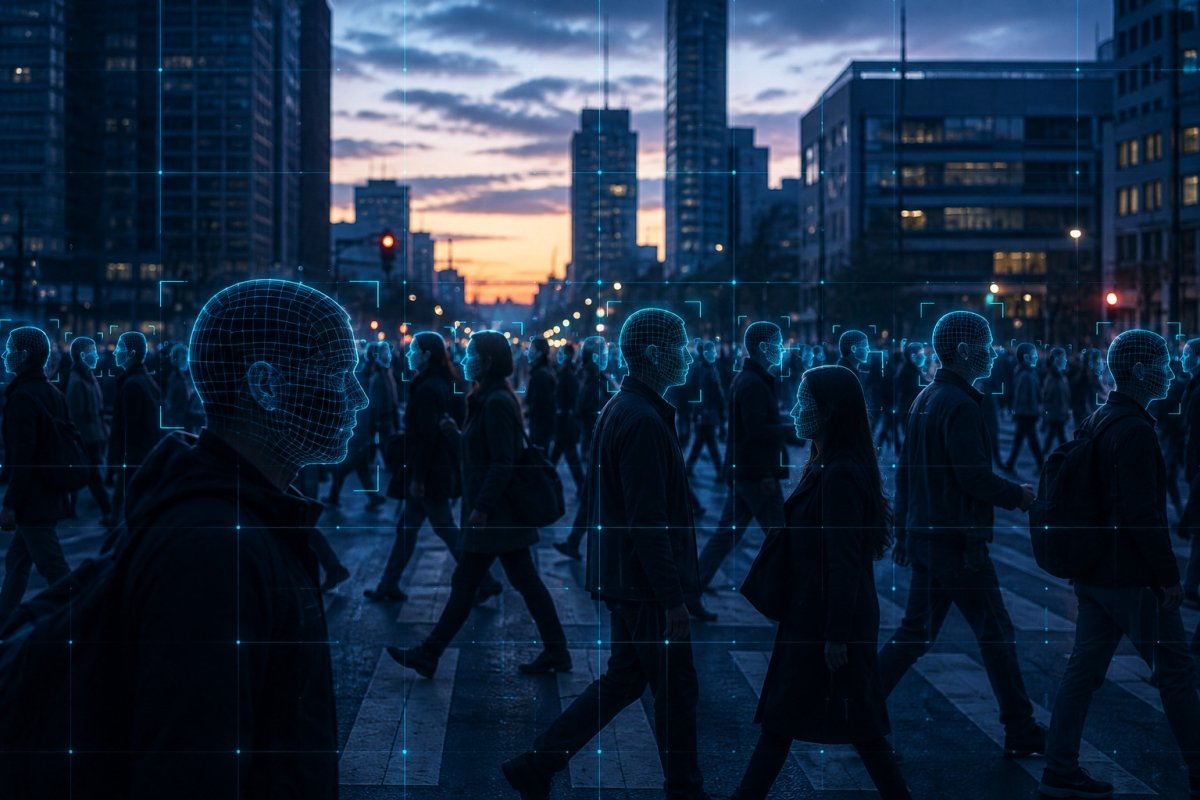
The controversy isn't really about whether facial recognition works - it's about who gets to use it, on whom, and with what oversight. Unlocking your own phone with your own face, opted into voluntarily, is a fundamentally different use case from a government or police department scanning a crowd of protesters without consent or a clear legal basis, even though the underlying technology is identical. Public opinion reflects this split clearly: a majority of Americans oppose police use of facial recognition even while a majority use it comfortably to unlock a device, and support drops further, to under a third, for private companies deploying it in public spaces like retail stores or advertising.
Where Regulation Has Actually Responded
A handful of jurisdictions have moved decisively. San Francisco became the first major US city to ban police use of facial recognition, and several other cities have followed with restrictions of varying strength. The European Union's AI regulations impose meaningful limits on real-time biometric surveillance in public spaces, with narrow exceptions for serious crime. Most of the world, however, still operates with minimal specific regulation, leaving the boundary between "convenient authentication" and "pervasive surveillance" to be set largely by individual company policy and local law enforcement discretion rather than clear, consistent legal frameworks.
What You Can Actually Control
On your own devices, using biometric unlock is broadly considered safe - the data typically stays encrypted on the device itself and isn't transmitted elsewhere in most modern implementations. Where you have less control is public and semi-public use: retail stores, workplaces, and government systems that scan and store facial data without a clear, easily accessible policy on how long it's kept or who it's shared with. Checking whether a business discloses its use of facial recognition, and supporting the growing number of local regulations that require that disclosure, is currently one of the few meaningful levers available to individuals in a space where the technology has significantly outpaced the rules governing it.